Reviewing Christmas Angels Laser Cut Files for Embroidery
As a designer who has spent countless hours digitizing and stitching out holiday motifs, I approach every new machine embroidery design with a mix of curiosity and skepticism. The market is flooded with seasonal graphics, but few truly translate well from a digital screen to actual thread on fabric. Recently, I evaluated the Christmas Angels Laser Cut Files to determine their viability for real-world embroidery projects. While the title suggests a laser-cutting application, the structural integrity and line work offer intriguing possibilities for stitch-based crafts, provided you understand how to adapt the geometry for needle and thread.
First Impressions and Visual Mood
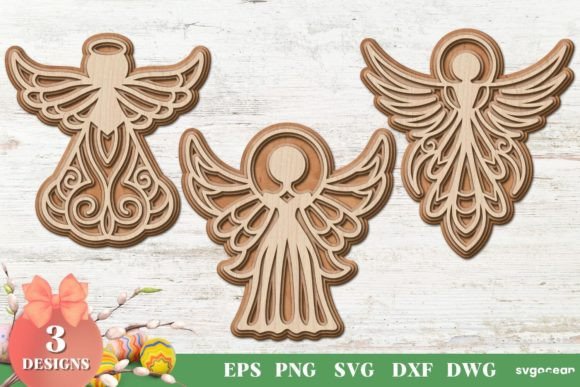
The immediate impression of the Christmas Angels Laser Cut Files is one of delicate elegance. Unlike bulky, cartoonish holiday characters, these designs rely on clean lines and open spaces. For an embroidery designer, this is a double-edged sword. Open space means less thread consumption and faster stitch-out times, but it also demands precision in placement and stabilizer choice. The mood is serene and traditional, fitting perfectly within the Winter Amp aesthetic that many boutique shops are currently curating. It feels less like a mass-produced graphic and more like a hand-drawn illustration, which adds significant perceived value to any handmade product.
When visualizing this for a client project, I immediately thought of high-end home decor. The silhouette of an angel lends itself beautifully to minimalist holiday styling. It does not scream for attention; rather, it invites a closer look. This subtlety is crucial for modern consumers who often prefer understated elegance over loud, festive clutter. If you are building a brand around sophisticated holiday gifting, this design asset aligns well with that identity.
Real-World Application: The Custom Tote Bag Test
To test the practicality of this design, I simulated a project for a local craft fair: a heavy canvas tote bag design intended for holiday grocery runs or gift carrying. Canvas is a sturdy fabric, but it can be unforgiving if the stitch density is too low or the stabilizer is insufficient. Using the angel motif as a central focal point, I considered how the lines would hold up against the coarse texture of the material.
In this scenario, the Christmas Angels Laser Cut Files would need to be converted or interpreted carefully. If used as a basis for an applique design, the clean edges make cutting fabric shapes straightforward. You could layer a cream linen angel onto a deep green canvas bag, using a narrow satin stitch border to secure it. This approach minimizes puckering and creates a textured, professional finish. Alternatively, if stitching directly, a combination of running stitch for outlines and light fill stitch areas would maintain the airy feel of the original laser file while ensuring durability. Customers reacting to such a bag would likely appreciate the craftsmanship, seeing it as a premium personalized gift rather than a generic item.
Apparel and Wearable Considerations
Moving beyond bags, I considered custom apparel applications. A sweatshirt embroidery project featuring this angel design could be stunning if placed correctly. However, fleece and knit fabrics present challenges. The stretchiness of a sweatshirt requires robust stabilization. If you attempt to stitch fine details from the Christmas Angels Laser Cut Files directly onto a stretchy fabric without proper backing, the design may distort after washing.
For baby embroidery items, such as a onesie or burp cloth, the design’s simplicity is an asset. Babies require soft, non-irritating finishes. A large, dense block of stitches can feel stiff against sensitive skin. By using the angel shape as a guide for a lightweight applique or sparse stitching, you create a soft, flexible finished product that parents will trust. It becomes a cherished keepsake rather than just clothing.
Navigating Technical Challenges
While the aesthetic appeal is high, there are areas where caution is necessary. The intricate nature of laser-cut files often includes very thin connections or tiny details that do not translate well to thread. In embroidery, a thread has a physical thickness that can bridge small gaps or clog tight corners. When working with the Christmas Angels Laser Cut Files, you must inspect the design at 100% zoom. Look for areas where lines converge sharply. These may need slight simplification in your digitizing software to prevent thread breaks or bird nests.
Hoop size is another critical factor. If you are working with a small 4x4 hoop, you may need to scale the design down, which risks losing detail. Conversely, on a large 5x7 or 6x10 hoop, the design might appear too sparse if not balanced with other elements. Always test the design on scrap fabric first. Check the stitch density to ensure it is not too light, which can cause the fabric to show through, or too dense, which causes puckering.
Fabric texture also plays a role. On dark fabrics, light thread colors provide excellent contrast, making the angel shape pop. However, on textured fabrics like terry cloth or wool, fine lines can get lost. In such cases, increasing the stroke width or using a thicker thread weight might be necessary to maintain visibility. For embroidered patch creation, the design works well because the stiff backing of the patch supports the structure, allowing for crisp edges even with complex shapes.
Commercial Viability and Brand Trust
For Etsy sellers and small shop owners, the choice of design directly impacts brand perception. Using a high-quality, well-thought-out motif like the Christmas Angels Laser Cut Files signals professionalism. It shows that you care about the details. When customers see a clean, well-stitched angel on a kitchen towel or pillow cover, they associate that quality with your entire brand. This builds trust and encourages repeat business.
Moreover, versatility is key for commercial success. This design can be adapted for various design assets. It can serve as the centerpiece for a holiday card, a watermark for printable mockup previews, or a subtle detail on a branded apron. Its neutral, classic style ensures it does not date quickly, allowing you to use it across multiple seasons with minor color adjustments. For commercial embroidery projects, always confirm licensing terms. Ensure that the file usage rights allow for the sale of physical goods, as this is a common pitfall for new craft business owners.
Final Designer Notes
Before committing to a full production run, take these practical steps. First, digitize or convert the Christmas Angels Laser Cut Files with attention to stitch direction. Horizontal stitches often lay flatter on knits, while vertical stitches can provide better coverage on wovens. Second, experiment with thread colors. Traditional gold and white are safe, but consider muted pastels or metallic threads for a modern twist. Third, always use an appropriate stabilizer. For delicate fabrics, a tear-away might suffice, but for items that will be washed frequently, a cut-away stabilizer provides long-term stability.
In conclusion, while originally formatted for laser cutting, the Christmas Angels Laser Cut Files offer a refined template for embroidery when handled with technical care. They bridge the gap between digital precision and tactile warmth, making them a valuable addition to your holiday design library. Whether you are creating a holiday embroidery piece for your home or a small shop product for sale, this design rewards attention to detail with a result that feels both timeless and fresh.