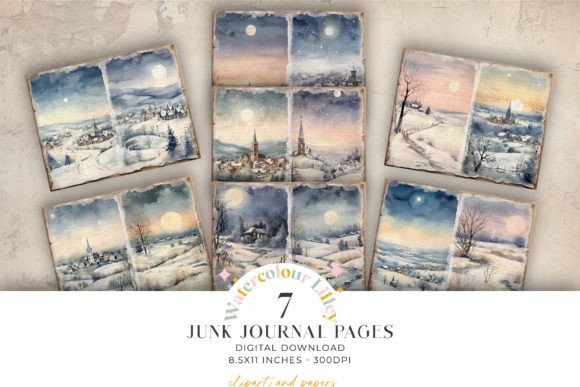
Reviewing Winter Christmas Junk Journal BiFold for Stitchers
As a designer who has spent countless hours digitizing and testing machine embroidery designs, I approach every new file with a critical eye. We all know the difference between a design that looks pretty on a screen and one that actually performs under the needle. Today, I am taking a close look at the Winter Christmas Junk Journal BiFold. This is not just another holiday motif; it falls into the Backgrounds category, which immediately signals that it is intended to serve as a foundational layer or a textured backdrop rather than a standalone focal point. For embroidery designers, Etsy sellers, and craft business owners, understanding how this specific asset behaves in real-world applications is crucial before committing to production.
First Impressions and Visual Personality
When I first loaded the Winter Christmas Junk Journal BiFold into my editing software, the immediate impression was one of nostalgic clutter. The term "junk journal" implies a collage aesthetic—layers of paper, tape, stamps, and ephemera. Translating this chaotic charm into thread is a delicate balancing act. The design relies heavily on visual texture rather than solid blocks of color. It creates a mood that is cozy, vintage, and distinctly handmade. For those of us creating personalized gifts or boutique products, this aesthetic is highly desirable because it feels curated rather than mass-produced.
The layout suggests a bi-fold structure, reminiscent of an open book or a greeting card. This symmetry offers versatility. You can use the entire spread for larger items like pillow covers or tote bags, or isolate one side for smaller applications like embroidered patches or cap fronts. The detail level is moderate to high, which means it requires careful attention to stitch density and thread choice to ensure clarity.
Real-World Application: The Holiday Tote Bag Test
To evaluate the practical utility of this design, I imagined a common scenario for small shop owners: preparing a custom embroidered tote bag for the holiday season. Tote bags are a staple for Etsy sellers and craft fair vendors. They need to be durable, visually appealing, and quick to produce. I envisioned stitching the Winter Christmas Junk Journal BiFold onto a heavy canvas tote using a contrasting thread palette.
In this context, the design shines as a background element. Instead of a single large Santa or snowman, this design provides a rich, textured field that allows for personalization. Imagine adding a client’s name in a simple satin stitch over the lighter areas of the junk journal background. The result is a sophisticated, layered look that elevates a basic cotton bag into a premium handmade product. The visual appeal here drives customer trust; it shows that the maker has invested time in selecting complex, interesting design assets rather than relying on generic clipart.
Performance on Different Fabrics
However, the success of this project depends entirely on fabric selection. Because this is a background design with potentially intricate details, it behaves differently on various materials. On a smooth, tightly woven cotton or linen, the stitches will lay flat and crisp. The running stitch and fill stitch elements will define the "paper" textures effectively. But on textured fabrics like wool blends or fuzzy fleece, some of the finer details might get lost. If you are making sweatshirt embroidery, consider simplifying the color palette to ensure the design doesn’t become muddy against the plush fabric texture.
For baby embroidery projects, such as a nursery wall hanging or a soft blanket, caution is advised. The stitch density must be checked carefully. A dense background can make a garment stiff or uncomfortable against sensitive skin. Always test the design on scrap fabric first to gauge the hand feel of the finished product.
Navigating Technical Challenges
From a technical standpoint, working with a design like Winter Christmas Junk Journal BiFold requires strategic planning. Here are the key areas where I recommend exercising care:
- Hoop Size Constraints: Ensure your hoop size accommodates the full bi-fold spread if you intend to use it whole. If you are working with a smaller hoop, you may need to split the design, which requires precise alignment skills.
- Stitch Density: Background designs can sometimes accumulate too many stitches in overlapping areas. Check your digitizing software to ensure there are no unnecessary underlays or excessive overlap that could cause thread breaks or puckering.
- Thread Colors: This design likely relies on subtle shifts in tone to create depth. Use high-quality thread colors that offer good contrast against your base fabric. Testing the design in black and white mockups can help you identify areas where definition might be lost.
- Stabilizer Choice: Given the potential complexity, a cut-away stabilizer is often safer than tear-away for garments that will undergo frequent washing. This ensures the design remains stable and does not distort over time.
Commercial Viability and Brand Consistency
For commercial embroidery and digital product sellers, the Winter Christmas Junk Journal BiFold offers significant value. It serves as an excellent base for printable mockups and digital embroidery file previews. By showcasing this design on various products—such as aprons, kitchen towels, or even digital representations of patches—you can demonstrate versatility to potential buyers. It helps in building brand consistency by establishing a recognizable aesthetic style that customers can associate with your shop.
Moreover, this type of design appeals to buyers looking for unique holiday embroidery that stands out from traditional red-and-green motifs. It fits well within the growing trend of vintage-inspired and eclectic home decor. When used in custom apparel or personalized products, it adds a layer of sophistication that can justify a higher price point. Buyers engage more deeply with products that tell a story, and the junk journal aesthetic inherently suggests history and memory.
Practical Designer Notes
- Test Before Production: Never skip the step of stitching out a sample on the actual fabric you plan to use. This is especially true for background designs where texture interaction is key.
- Check Licensing: Before selling finished items or digital products featuring this design, confirm the license terms. Ensure it allows for commercial use if you are an Etsy seller or small business owner.
- Contrast is Key: If stitching on dark fabric, ensure the thread colors are light enough to pop. Conversely, on light fabric, avoid threads that are too pale, or the design will disappear.
- Simplify for Small Items: For small hoop sizes or curved surfaces like caps, consider using only a portion of the design. Full complexity may not translate well on limited surface areas.
In conclusion, the Winter Christmas Junk Journal BiFold is a versatile and evocative addition to any embroidery designer’s library. It requires thoughtful execution regarding fabric choice, stabilizer, and thread selection, but the payoff is a rich, textured finished product that resonates with customers seeking unique, handmade quality. Whether you are creating a custom tote bag, a holiday gift, or a boutique merchandise line, this design offers the depth and character needed to elevate your work. Just remember to respect the technical demands of the design, and it will serve as a reliable asset in your creative toolkit.